


TL;DR
- The food processing industry is facing multiple challenges such as stringent regulations, complex supply chains and evolving consumer demands.
- Digital transformation with SAP provides food manufacturers with integrated solutions for operations, compliance and traceability.
- Companies can achieve increased profitability and a solid competitive advantage with real-time insights and intelligent automation.
- Whether small producers or large manufacturers, all have access to scalable SAP solutions.
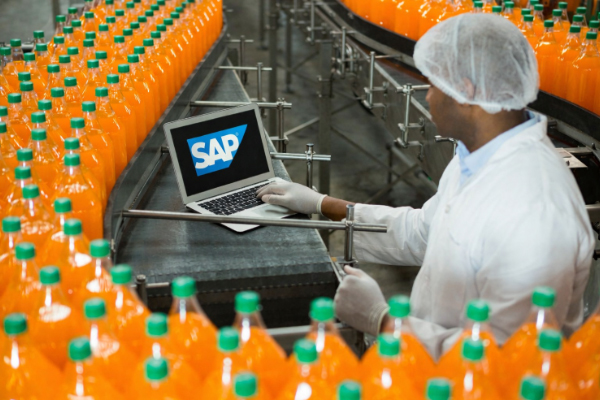
The food processing industry operates in a complex environment where traditional methods are no longer enough. Food safety regulations, fluctuating costs, changing consumer demands and fierce competition are making the situation challenging for manufacturers. Businesses must focus on digital transformation to achieve faster growth in a hypercompetitive market environment.
Digital transformation with SAP enables food processing companies to modernise their operations and build resilient supply chains. By leveraging cloud computing, AI and IoT, SAP solutions allow manufacturers to transform from reactive to proactive operations.
The Challenges Facing Food Processors Today
Food processing companies face multiple operational challenges requiring sophisticated solutions. Accurately tracking expiration dates and batch numbers is important for minimising waste and managing perishable inventory. Moreover, supply chains extend across multiple geographies, which creates additional complexity at every stage.
Food companies also have to deal with regulatory compliance. Clear documentation and strong quality controls are necessary to meet food safety standards and certifications such as ISO or HACCP. Non-compliance leads to penalties and reputational damage. Apart from that, consumer preferences are shifting towards sustainable products, which means a higher need for transparency while maintaining profitability.
How SAP Solutions for the Food Industry Address Core Pain Points
Digital transformation with SAP enables companies to address the various challenges through a unified platform that connects all aspects of food processing. By providing end-to-end visibility across the value chain, the platform allows manufacturers to monitor procurement, production, distribution and inventory in real-time.
Here are the key capabilities that SAP Business One offers:
- Batch tracing: Complete ingredient tracking from source to final product, which ensures regulatory compliance and quality assurance.
- Recipe management: Companies have precise control over formulations and nutritional calculations, which helps ensure consistency while also facilitating innovation.
- Production planning: Companies can optimise manufacturing schedules according to demand forecasts. This reduces downtime and maximises resource utilisation.
- Quality control: It is simpler to maintain product standards and safety requirements with automated safety checks at each stage.
The Power of SAP Business One Service for Food Manufacturers
SAP Business One service offers enterprise-grade capabilities for small and mid-sized food processing companies in an accessible package. By integrating financial management, inventory control, procurement and sales into a single platform, the cloud-based ERP helps eliminate data silos.
The inventory management features are particularly valuable for managing perishable goods. There are automated alerts to notify managers about stock levels and approaching expiration dates. Businesses can define tests at multiple stages, maintain detailed records and ensure compliance with the help of quality control modules.
Moreover, real-time financial insights into cash flow, profitability and cost variances enable leaders to make data-driven decisions. Managers also have access to dashboards that highlight key performance indicators for strategic planning.
Driving Higher Operational Excellence Through Food Processing Digital Transformation
Digital transformation in food processing basically changes how organisations operate and compete. SAP centralises data and automates tasks, enabling employees to focus on innovation and market expansion.
Advanced analytics capabilities enable manufacturers to analyse production efficiency and yield across facilities, monitor quality metrics with trend identification and understand customer patterns for demand forecasting. They also allow tracking supplier performance for better procurement decisions.
Here are the key benefits in terms of sustainability and compliance:
- Energy consumption and carbon emissions monitoring.
- Waste generation tracking and reduction strategies.
- Automated environmental reporting for regulatory compliance.
These insights help find opportunities for cost reduction and revenue growth while demonstrating corporate responsibility.
Building a Future-Ready Food Processing Business
Digital transformation with SAP offers tangible benefits that help food manufacturers achieve long-term success.
Here are some notable operational benefits:
- Optimised scheduling leads to significant production efficiency improvements.
- Intelligent forecasting helps reduce inventory waste.
- Time-to-market for new products can accelerate.
- Enhanced supply chain visibility lets companies swiftly respond to demand changes.
SAP solutions also offer some crucial strategic advantages:
- IT infrastructure costs are reduced with cloud-based deployment.
- You always have access to the latest features through automatic updates.
- Higher scalability means businesses can grow without system limitations.
- Sensitive information remains protected through enhanced data security.
Conclusion
In the food industry, digital transformation with SAP provides an integrated platform and intelligent automation along with real-time insights that are essential for navigating today’s complex environment while building a solid foundation for growth.
SAP solutions for the food industry address the full array of challenges faced by modern manufacturers, from compliance to product safety and supply chain optimisation. SAP offers scalable solutions that are tailored to the needs of organisations, including small producers and large processors.
At Praxis Info Solutions, we specialise in delivering SAP implementations tailored to the needs of the food industry. With a deep understanding of food industry-specific challenges, our solutions help streamline processes, improve traceability and enhance compliance across your operations. Contact us today to achieve operational excellence and sustainable growth.
FAQs
SAP implementation timelines for food processing companies can vary depending on company size, complexity and scope. However, for SAP Business One implementations, it can take 3 to 9 months. For larger enterprises planning to implement comprehensive SAP S/4HANA solutions, 12 to 18 months may be needed.
Yes, SAP solutions offer robust integration features for third-party systems such as laboratory information management systems (LIMS), manufacturing execution systems (MES), warehouse management systems and Internet of Things devices. These integrations help create a unified ecosystem where data flows seamlessly across all systems.
While ROI can vary by organisation, food manufacturers generally see measurable benefits within 12 to 24 months. Apart from a significant reduction in inventory carrying costs, they may experience improved production planning accuracy, decreased operational costs and faster order-to-delivery cycles. With better compliance, the risk of costly recalls and regulatory penalties is also reduced.